English
 русский
 Español
 عربى
عربى
Structural Design and Functional Configurations
The angle valve derives its name from its configuration: the inlet and outlet ports are oriented at a 90-degree angle to one another. This right-angle design serves both functional and spatial purposes. The inlet is typically positioned in line with the supply pipe—often emerging from a wall or floor—while the outlet is oriented perpendicularly, directing flow toward the fixture, such as a toilet, faucet, or appliance. This geometry allows the valve to function as both a shutoff device and a directional transition, reducing the number of fittings required in the supply line.
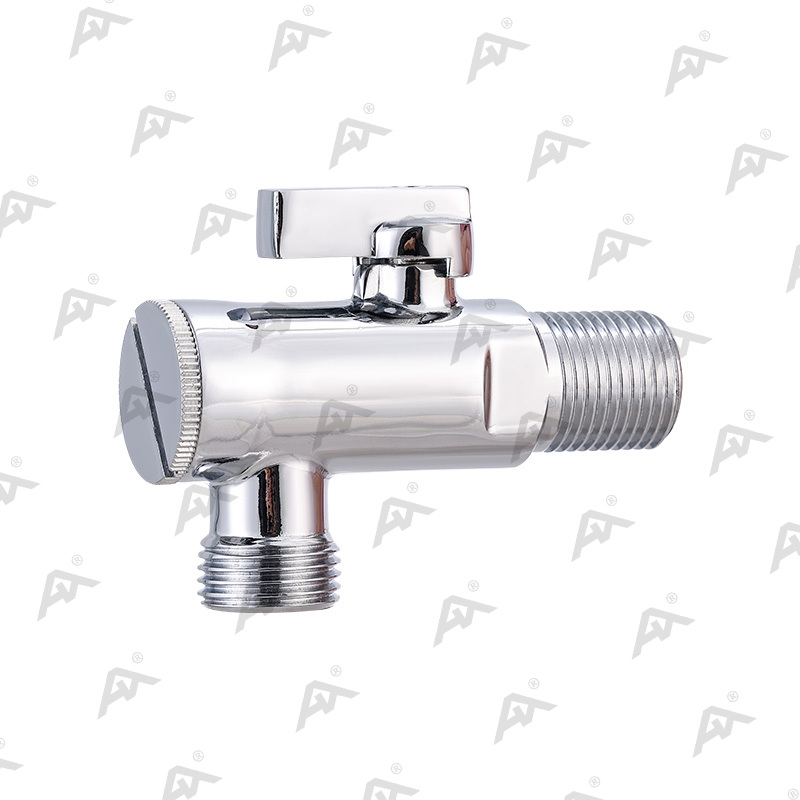
Structural components and their functions:
Valve body: The body houses the internal operating mechanism and provides the threaded connections. Forged brass bodies are formed as a single piece, eliminating potential leak paths that exist in multi-piece constructions. The body incorporates integral mounting flanges or threads for securing the valve to the supply pipe. Wall-mount angle valves typically feature a flange that covers the wall opening, providing a finished appearance while allowing access to the valve mechanism.
Valve stem and packing: The stem transmits rotational motion from the handle to the sealing element. Valve stems are machined from brass bar stock with threads that engage the body. The packing—typically a stack of graphite-impregnated fiber washers, PTFE rings, or an elastomeric O-ring—provides a dynamic seal around the stem, preventing leakage while allowing rotation. Compression packing, where a packing nut compresses the sealing material against the stem, allows for field adjustment if leakage develops over time. Quarter-turn ceramic disc valves use a different configuration where a polished ceramic disc rotates against a stationary disc, with sealing provided by the flatness of the ceramic surfaces rather than compression packing.
Sealing mechanism: The sealing mechanism defines the valve's operating characteristics and longevity. Traditional compression valves use a rubber or silicone washer compressed against a seat by a threaded stem. When the valve is fully closed, the washer seals against the seat, stopping flow. These valves require multiple turns to operate and are susceptible to washer deterioration over time. Quarter-turn ball valves use a spherical ball with a through-hole; rotating the ball 90 degrees aligns or blocks the flow path. Ball valves provide positive shutoff and rapid operation, but require higher torque for operation. Quarter-turn ceramic disc valves offer smooth operation and long service life, with the ceramic surfaces resisting wear and chemical attack.
Operational Mechanisms and Flow Control Characteristics
The operational characteristics of brass angle valves are determined by the internal mechanism design, which influences factors such as operating torque, flow control precision, shutoff reliability, and maintenance requirements. Three primary mechanism types dominate the market: compression (multi-turn) valves, quarter-turn ball valves, and quarter-turn ceramic disc valves.
Compression valves operate through a threaded stem that moves a sealing washer toward or away from a seat. Each full rotation of the handle moves the stem by a distance equal to the thread pitch—typically 1.0 to 1.5 millimeters per rotation. This gearing provides fine control over flow rate, allowing precise adjustment from full flow to complete shutoff. The sealing washer, usually made from ethylene propylene diene monomer (EPDM) or nitrile rubber, creates a tight seal when compressed against the metal seat. However, this design has limitations: the washer deteriorates over time due to water chemistry, temperature, and mechanical compression, requiring replacement after 5 to 15 years depending on water quality and frequency of operation. Compression valves also require packing maintenance, as the packing around the stem may develop leaks after years of operation.
Quarter-turn ball valves employ a spherical ball with a bore through its center. When the handle is parallel to the valve body, the bore aligns with the flow path, allowing full flow. Rotating the handle 90 degrees positions the solid portion of the ball across the flow path, stopping flow. The ball is typically chrome-plated brass or solid brass, sealing against PTFE seats that provide low operating torque and consistent shutoff. Ball valves offer several advantages: operation requires only a quarter-turn, providing rapid shutoff; the straight-through flow path when open presents minimal pressure drop; and the absence of packing compression nuts eliminates a common leak point. However, ball valves generally provide less precise flow control than compression valves, as the relationship between handle position and flow rate is nonlinear, with flow adjustment occurring within the first 15 to 20 degrees of rotation.
Installation, Maintenance, and Service Life Factors
The longevity and reliability of brass angle valves depend significantly on proper installation practices, appropriate application matching, and routine maintenance. Under favorable conditions, brass angle valves can provide 20 to 40 years of service, though this varies substantially based on water quality, frequency of operation, and installation quality.
Installation considerations: Proper installation begins with selecting the correct valve for the application. Wall-mount angle valves require precise rough-in dimensions; the supply pipe must extend the correct distance from the finished wall surface to allow the valve to seat properly. For compression connections, the pipe end must be cut square and deburred to prevent damage to the compression ferrule. Over-tightening compression nuts is a common installation error—excessive torque can deform the ferrule excessively, restrict flow, or stress the valve body. Threaded connections require appropriate thread sealant (PTFE tape or pipe dope) applied to the male threads, with care taken to avoid introducing sealant into the valve interior where it could interfere with the sealing mechanism.
Strain relief and support: Angle valves should not be used as structural supports for downstream components. Flexible supply lines should be supported or arranged to avoid imposing sustained loads on the valve outlet. Where rigid supply tubes are used, the tubing must be precisely bent to align with the valve outlet without requiring force to connect. Sustained loads from misaligned connections can cause stress cracking of the valve body or premature failure of compression fittings.
Operation and maintenance practices: Valves that are operated infrequently—such as fixture shutoffs that remain open for years—may become difficult to operate when needed due to mineral deposition or seal adhesion. Periodic exercise (fully opening and closing the valve once or twice annually) maintains mechanism mobility and prevents seizure. For compression valves, the packing nut may require occasional tightening if minor stem leakage develops; the nut should be tightened only enough to stop leakage, as over-tightening increases operating torque and can cause stem binding.
Indicators of valve degradation: Several signs indicate that a brass angle valve may require replacement. Visible corrosion—particularly green or white deposits on the valve body—suggests dezincification or galvanic corrosion. Stiff operation requiring excessive force indicates mineral buildup, seal deterioration, or stem damage. Leakage from the valve body or connections that cannot be corrected by tightening indicates structural failure. For compression valves, repeated washer replacement may indicate seat damage rather than normal wear.
Conact Us Anytime.
-
Email us
kyoda@kyodavalve.com
-
Call us
+86-19105861791