English
 русский
 Español
 عربى
عربى
Main Functions of Brass Balancing Valves
Main Functions of Brass Balancing Valves
Brass balancing valves are essential components in hydronic heating and cooling systems, commonly used in residential, commercial, and industrial applications. Their primary function is to control and regulate the flow of water or other fluids in a piping system, ensuring that each part of the system receives the appropriate amount of flow. By adjusting the valve, the water distribution can be balanced, ensuring that all sections of the system operate efficiently.
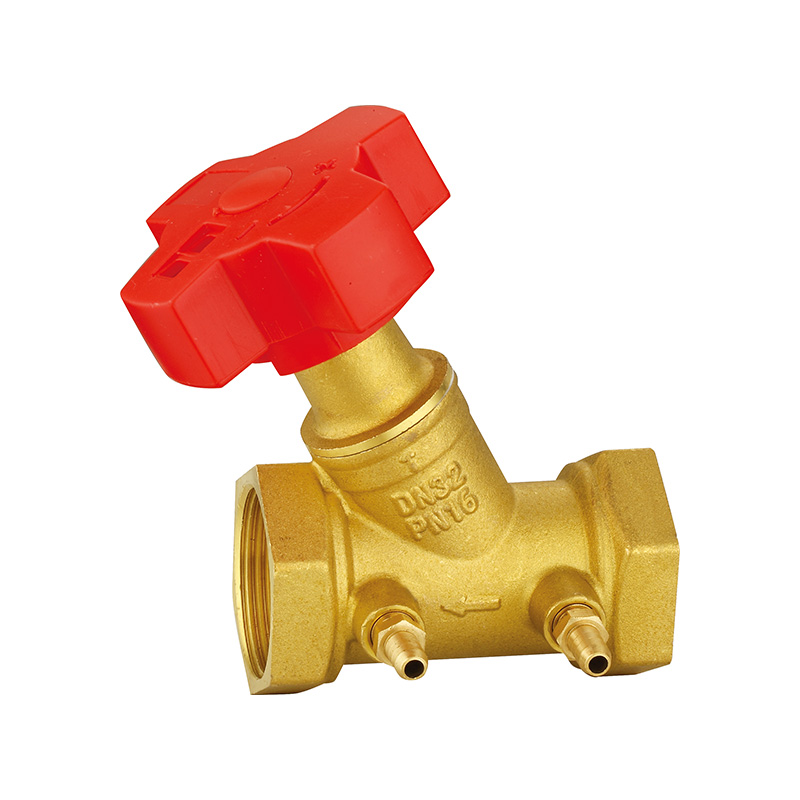
One of the main functions of a brass balancing valve is to maintain the desired pressure drop across each part of the system, which is crucial for ensuring that each radiator, fan coil, or other heat exchanger receives the correct amount of fluid. This helps to prevent areas in the system from being over- or under-supplied with fluid, which can cause inefficiencies or damage to the system.
Another key function is to assist in energy efficiency. When the flow rate is balanced, the system works at its capacity, preventing excessive energy consumption or uneven heating and cooling. Balancing valves also help to reduce noise and vibrations in the system by preventing hydraulic imbalances. This contributes to a quieter and smoother operation of HVAC systems.
Brass balancing valves also play an important role in improving system longevity by ensuring that all components work within their specified limits, reducing wear and tear caused by improper flow distribution.
Materials of Brass Balancing Valves
Brass balancing valves are typically made from a combination of brass, a durable and corrosion-resistant alloy of copper and zinc. Brass is chosen because of its mechanical properties, which include strength, resistance to corrosion, and ease of machining. These qualities make brass ideal for use in high-pressure and high-temperature environments, as commonly found in heating and cooling systems.
The brass used in these valves is generally alloyed with small amounts of other metals, such as lead, to enhance machinability or zinc to improve strength and resistance to wear. Lead-free versions are also available, meeting modern environmental standards in some regions. The brass composition ensures that the valves can withstand the internal pressures and temperatures typically encountered in hydronic systems, without degrading over time.
In addition to brass, internal components of the valve, such as seals, gaskets, and springs, may be made from materials like rubber or stainless steel. The sealing materials are carefully selected for their resistance to wear, temperature fluctuations, and corrosion, ensuring long-lasting, leak-proof performance. Stainless steel or other alloys may be used for the spring and adjustment mechanisms, which require additional strength to maintain precision control over the fluid flow.
This combination of brass and other materials allows balancing valves to perform effectively under a variety of environmental conditions while maintaining durability and reliability over the long term.
Advantages of Brass Balancing Valves
There are several key advantages to using brass balancing valves in hydraulic systems. One of the primary benefits is their durability. Brass is a robust material that can handle high pressure and temperature fluctuations without compromising its structural integrity. This makes brass balancing valves suitable for use in both residential and industrial HVAC systems, where they are exposed to varying conditions. Brass is also highly resistant to corrosion, which extends the life of the valve and prevents maintenance issues.
Brass balancing valves are typically designed with user-friendly features, such as a simple adjustable mechanism that allows for precise control over fluid flow. This makes it easier for engineers and technicians to achieve the required balance within a system. The valves are also available in different sizes and designs to accommodate various system configurations.
Brass balancing valves contribute to energy efficiency. By ensuring that the flow of water or fluid is balanced throughout the system, these valves help prevent overflows and energy wastage. This, in turn, bring about more consistent heating and cooling performance, improving the overall efficiency of HVAC systems. Balancing valves also help reduce strain on the system by maintaining stable pressure levels, which can bring about less wear and tear on the components.
Brass balancing valves are cost-effective. While they are durable and high-performing, the material itself is relatively affordable compared to some other options, providing a good balance between cost and quality. Their longevity and low maintenance requirements also contribute to overall cost savings over the life of the system.
Conact Us Anytime.
-
Email us
kyoda@kyodavalve.com
-
Call us
+86-19105861791