English
 русский
 Español
 عربى
عربى
How Do 1-Inch Brass Ball Valves Compare to Other Manufacturing Processes?
Brass ball valves are widely used in plumbing, heating, and industrial fluid systems to control the flow of liquids or gases. The 1-inch brass ball valve, in particular, is a common size suitable for residential and light commercial applications. Comparing the manufacturing process of 1-inch brass ball valves with other valve production methods provides insight into their structural characteristics, production advantages, and limitations.
Structure and Function of 1-Inch Brass Ball Valves
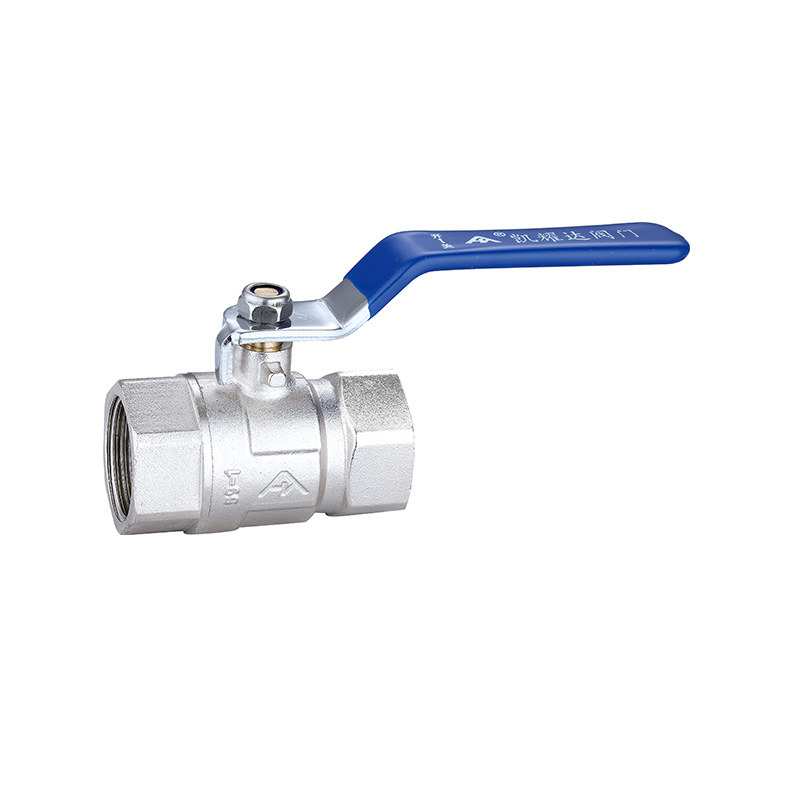
1-inch brass ball valves consist of several components designed for simple and reliable flow control.
Valve Body: Made from brass alloy, the body forms the main structure and houses the ball, seats, and stem.
Ball Component: The spherical ball inside the valve has a through-hole that allows fluid to flow when aligned with the pipeline.
Seals and Seats: Typically constructed from PTFE or similar polymer materials, these components ensure tight shutoff and reduce leakage.
Stem and Handle: The stem connects the ball to the external handle, allowing manual rotation to open or close the valve.
The design enables quick quarter-turn operation, making ball valves convenient for applications that require on/off control rather than throttling.
Manufacturing Processes for 1-Inch Brass Ball Valves
1-inch brass ball valves are produced using several manufacturing techniques, each with specific characteristics.
Casting:
Brass is melted and poured into molds to form the valve body.
Provides a cost-effective method for creating complex shapes.
Requires post-casting machining to achieve precise dimensions for the ball seat and internal passages.
Forging:
Brass is heated and mechanically pressed into the desired shape.
Results in a denser, more uniform structure than casting, enhancing mechanical strength.
Requires additional machining for precision surfaces and sealing areas.
Machining:
valve components, including the ball and seats, are machined to tight tolerances.
Ensures proper alignment and smooth operation.
Can be applied after casting or forging to improve final product accuracy.
Assembly:
Components are assembled, with seals and ball installed in the body.
Handles and stems are attached, and the valve is tested for leakage and operation.
Comparison with Other Valve Manufacturing Methods
When compared to other types of valves, such as gate valves, globe valves, or plastic ball valves, the manufacturing of 1-inch brass ball valves shows distinct differences.
Material Selection:
Brass offers corrosion resistance, machinability, and moderate strength.
Plastic valves (PVC or CPVC) are easier to produce via injection molding but have lower pressure and temperature tolerance.
Stainless steel valves provide higher strength and temperature resistance but are more expensive and require additional machining.
Production Complexity:
Brass ball valves involve casting or forging, precise machining, and assembly.
Gate or globe valves may require more complex machining for the wedge or disk and seat interfaces.
Plastic valves can be molded in one step, reducing assembly requirements but limiting structural strength.
Flow Control Characteristics:
Ball valves allow simple quarter-turn operation.
Gate and globe valves provide finer flow regulation but involve more complex components.
Advantages and Limitations of Brass Ball Valve Manufacturing
Brass ball valves offer several advantages in their production process:
Durable Material: Brass is resistant to corrosion and suitable for water, gas, and oil applications.
Precision Machining: Casting or forging followed by machining ensures proper sealing and operation.
Compact Design: The manufacturing process allows small, lightweight components suitable for tight spaces.
However, there are also limitations:
Initial Tooling Costs: Molds for casting or dies for forging involve initial expenses.
Machining Requirements: Multiple precision machining steps are necessary, increasing production time and labor.
Pressure Limitations: Brass valves are suitable for moderate pressure but are not recommended for high-pressure systems compared to stainless steel or forged steel valves.
Conact Us Anytime.
-
Email us
kyoda@kyodavalve.com
-
Call us
+86-19105861791