English
 русский
 Español
 عربى
عربى
Why Do Sanitary Fittings Fail in Hidden Pipelines
Hidden pipeline systems are often assumed to be stable once installation is completed, especially in food, beverage, pharmaceutical, and industrial water networks. Reality shows a different pattern. Failures in Pipeline Sanitary Fittings Supplier systems rarely start at visible points. They usually develop inside concealed sections where inspection is limited and stress accumulates unnoticed.
These failures tend to appear suddenly at surface level, but the internal degradation process may have been developing for months or even years.
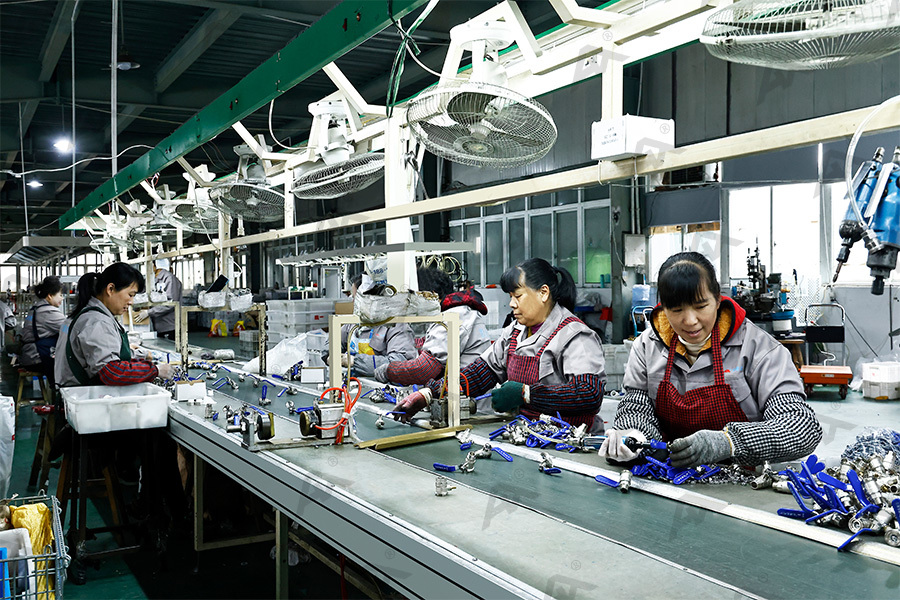
Concealed pipeline stress accumulation
Underground or enclosed sanitary pipelines operate under a mix of mechanical and environmental stress that is difficult to monitor directly.
Typical stress sources include:
- Continuous vibration from pumps and compressors
- Structural load from building movement or support frames
- Pressure fluctuations during batch processing cycles
- Thermal expansion inside insulated pipe runs
Because these systems are not visually accessible, small alignment shifts often remain uncorrected. Over time, minor displacement increases joint stress at fittings, especially at T-junctions and elbows.
Flow stagnation and internal degradation
Hidden pipelines frequently contain low-flow zones that do not receive consistent flushing. These areas become early points of degradation.
Common internal effects:
- Sediment buildup at bottom sections of horizontal pipes
- Biofilm formation in sanitary water lines
- Localized corrosion at low-velocity zones
- Uneven chemical exposure during CIP cycles
Research in hygienic system design highlights that geometry changes such as tees and reducers create natural stagnation points where cleaning efficiency drops significantly .
Once deposits form, they alter flow behavior, increasing turbulence upstream and accelerating wear on adjacent fittings.
Sealing system fatigue inside concealed joints
Sanitary fittings rely heavily on gasket compression or welded integrity. Inside hidden systems, sealing degradation is rarely detected early.
Key failure mechanisms include:
- Gasket compression set after repeated thermal cycles
- Loss of elasticity in elastomer materials
- Micro-gaps created by uneven clamp pressure
- Weld micro-cracks hidden beneath insulation layers
Because inspection is not routine in concealed areas, small sealing imperfections evolve without correction. Eventually, pressure cycling enlarges these weak points until leakage becomes visible externally.
Chemical imbalance in CIP and process fluids
CIP (Clean-In-Place) systems introduce strong chemical environments into sanitary pipelines. In hidden sections, chemical distribution is often uneven.
This leads to:
- Overexposure near injection points
- Under-cleaned distant pipeline segments
- Residual chemical concentration in dead legs
- Accelerated corrosion at stagnant interfaces
Even stainless steel sanitary systems are not immune when chloride concentration or temperature levels fluctuate beyond design assumptions.
Chemical imbalance does not cause immediate failure, but it changes surface conditions gradually, making fittings more vulnerable to mechanical fatigue later.
Mechanical stress from installation geometry
Hidden pipelines are often routed through constrained spaces such as walls, ceilings, or equipment racks. This creates installation compromises.
Common structural issues:
- Pipes forced into slight bending to fit available space
- Unsupported spans creating sagging stress
- Misaligned connections compensated by tightening force
- Expansion stress locked into rigid joints
According to industrial piping analysis, excessive torque and forced alignment can introduce residual stress that later contributes to leakage at adjacent fittings .
Once embedded, this stress is difficult to remove without partial system disassembly.
Pressure fluctuation effects in concealed systems
Pressure variation inside hidden pipelines is often more severe than in exposed systems because flow control devices are distributed unevenly.
Key behaviors include:
- Pump start-stop surge waves traveling through long pipe sections
- Sudden valve closure creating localized pressure spikes
- Reflection of pressure waves at blind ends
- Amplification of stress at directional changes
Over time, repeated pressure cycling initiates micro-cracks in fitting bodies or welded zones. These cracks are typically invisible until leakage occurs externally.
Early warning signs inside inaccessible pipelines
Even though direct inspection is limited, hidden pipeline systems often show indirect indicators of failure:
- Unexplained pressure drop in closed loops
- Increased pump cycling frequency
- Slight variation in flow consistency
- Moisture traces near wall penetrations
- Gradual change in system noise patterns
These symptoms usually indicate internal restriction, seal degradation, or micro-leak development inside concealed sections.
Material behavior differences under long-term concealment
Material aging behaves differently inside hidden environments compared with exposed piping.
Observed patterns include:
- Faster corrosion in low-oxygen stagnant zones
- Accelerated gasket aging due to trapped heat
- Localized metal fatigue at vibration points
- Differential degradation between identical fittings in different zones
This explains why identical sanitary fittings installed in the same system can show different lifespans depending on placement.
Engineering strategies to reduce hidden system risk
Modern pipeline design practices aim to reduce uncertainty in concealed sanitary networks through structural and operational improvements.
Common approaches:
- Increasing access points for periodic inspection
- Designing slope-based drainage in horizontal sections
- Reducing dead legs and stagnant branches
- Standardizing fitting geometry across long runs
- Applying vibration isolation near pumps and equipment
System reliability improves significantly when hidden sections are treated as high-risk zones rather than passive infrastructure.
Conact Us Anytime.
-
Email us
kyoda@kyodavalve.com
-
Call us
+86-19105861791