English
 русский
 Español
 عربى
عربى
Are Heating Valves Ready for Extreme Temperature Cycles
Heating and cooling systems in modern buildings are no longer operating under steady thermal conditions. Frequent start-stop cycles, mixed energy sources, and compact hydronic layouts create unstable environments for control components. Under these conditions, Hydro Sanitary Heating Valves Manufacturer products are increasingly evaluated not only by pressure ratings but also by thermal fatigue resistance and response stability.
Temperature variation becomes a dominant stress factor that gradually reshapes valve behavior inside closed-loop heating networks.
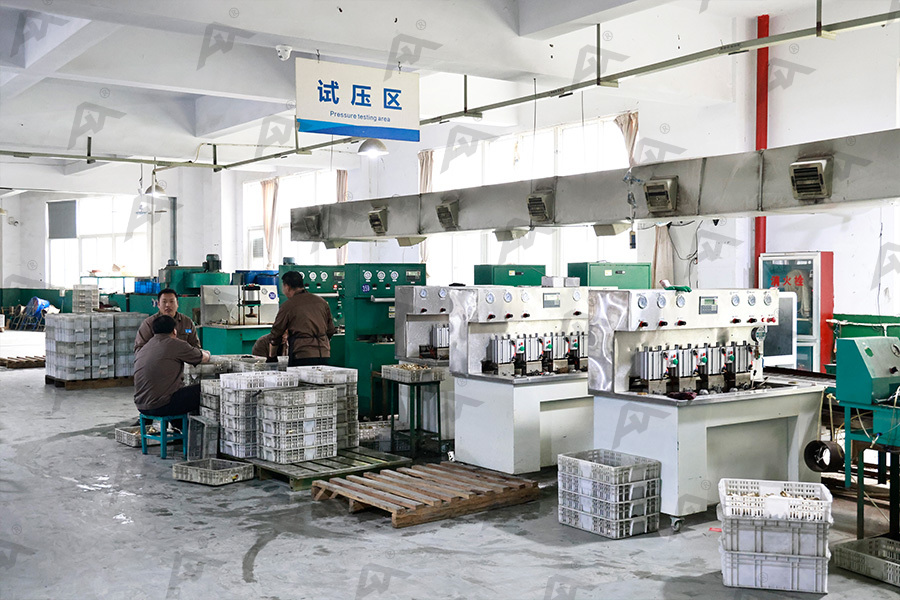
Thermal cycling as a structural stress driver
Heating systems rarely remain at a constant temperature. Instead, they move continuously between low standby conditions and peak operational heat loads.
Typical operating patterns include:
- Cold start conditions near ambient temperature
- Rapid heating to 60–90°C in hydronic loops
- Short cooling intervals during load adjustment
- Repeated daily on-off cycles in zoned systems
Each cycle creates expansion and contraction inside valve bodies and sealing interfaces. Over time, repeated dimensional changes reduce compression stability in sealing materials and increase internal micro-movement between components.
Even small deviations accumulate into mechanical fatigue across long service periods.
Thermal cycling is widely recognized as a major factor influencing valve seal reliability in bioprocess and HVAC systems, especially where repeated heating and cooling transitions occur in tightly sealed environments .
Seal fatigue and loss of elastic memory
Sealing elements in heating valves are typically made from elastomers or composite materials designed for temperature resistance. However, elasticity is not permanent.
Common degradation patterns include:
- Compression set after repeated heating cycles
- Loss of rebound capability in gasket materials
- Surface hardening under prolonged heat exposure
- Micro-cracking at sealing edges under stress reversal
Once elastic memory weakens, sealing force becomes uneven. This creates micro-leak paths that may not be immediately visible but gradually reduce system pressure stability.
In hydronic systems, even minor leakage can affect temperature balancing across multiple zones.
Flow instability caused by temperature transitions
Temperature changes directly influence fluid viscosity and density. This alters flow behavior inside heating valves.
Observed hydraulic effects:
- Faster flow at higher temperatures due to reduced viscosity
- Turbulence increase during rapid heating phases
- Flow imbalance between parallel circuits
- Pressure fluctuation during transition periods
These changes place dynamic stress on valve internals. Components designed for steady-state flow may experience unexpected vibration or oscillation during rapid thermal transitions.
Over time, this contributes to seat wear and delayed response behavior.
Material expansion mismatch inside valve assemblies
Heating valves often combine multiple materials: metal bodies, polymer seals, and composite actuators. Each material responds differently to temperature change.
Key mismatch behaviors:
- Metal expands faster than polymer seals under heat
- Differential movement creates micro-gap formation
- Repeated cycles loosen mechanical fit between parts
- Stress concentrates at interface boundaries
Once mismatch becomes persistent, the valve no longer returns to its original sealing geometry after cooling. This leads to gradual performance drift rather than sudden failure.
Control system interaction and operational stress
Heating valves do not operate independently. They respond to control signals from thermostats, PLC systems, or building automation networks.
System-level stress factors include:
- Frequent modulation commands in zone-controlled systems
- Rapid actuator cycling during load balancing
- Delayed feedback loops causing overshoot correction
- Continuous partial opening operation instead of full stroke cycles
Rapid cycling behavior can reduce mechanical lifespan in valve components. Research on rapid actuation systems shows that excessive switching frequency accelerates internal wear and deformation of moving parts .
In heating networks, this effect is amplified by constant temperature regulation demands.
Corrosion acceleration under thermal fluctuation
Thermal cycling does not only affect mechanical structure. It also influences corrosion behavior inside valves.
Key mechanisms include:
- Expansion cracks exposing fresh metal surfaces
- Condensation during cooling phases introducing moisture
- Chemical concentration changes in stagnant zones
- Protective film disruption under repeated stress
Temperature variation combined with pressure fluctuation accelerates corrosion processes in real-world deployments .
This explains why some valves show surface degradation even in relatively clean heating systems.
Early indicators of heating valve degradation
Heating valve failure is usually progressive. Several operational symptoms appear before full loss of function:
- Uneven room temperature distribution across zones
- Slight delay in actuator response during switching
- Audible clicking or vibration during operation
- Small pressure instability during heating cycles
- Intermittent leakage during cooling phase
These signals often indicate internal wear rather than external damage. Once identified, system performance can still be stabilized before full replacement becomes necessary.
System-level strategies for improving durability
Improving heating valve lifespan requires addressing both mechanical and operational factors.
Common engineering approaches:
- Reducing unnecessary on-off cycling frequency
- Introducing buffer tanks to stabilize temperature changes
- Using materials with matched thermal expansion coefficients
- Optimizing actuator control logic to avoid micro-cycling
- Improving system balancing to reduce localized pressure stress
These measures reduce cumulative fatigue and help stabilize long-term valve behavior in dynamic heating systems.
Conact Us Anytime.
-
Email us
kyoda@kyodavalve.com
-
Call us
+86-19105861791