English
 русский
 Español
 عربى
عربى
What You Should Know About Brass Pressure Reducing Valves
If you have ever turned on a tap and gotten a weak trickle, or turned on another tap and gotten a spray that splashes everywhere, you have experienced inconsistent water pressure. In many homes and small commercial buildings, the device that fixes this is a brass pressure reducing valve (also called a pressure-reducing regulator or PRV). It is a simple mechanical device with no electronics, but it does an important job.
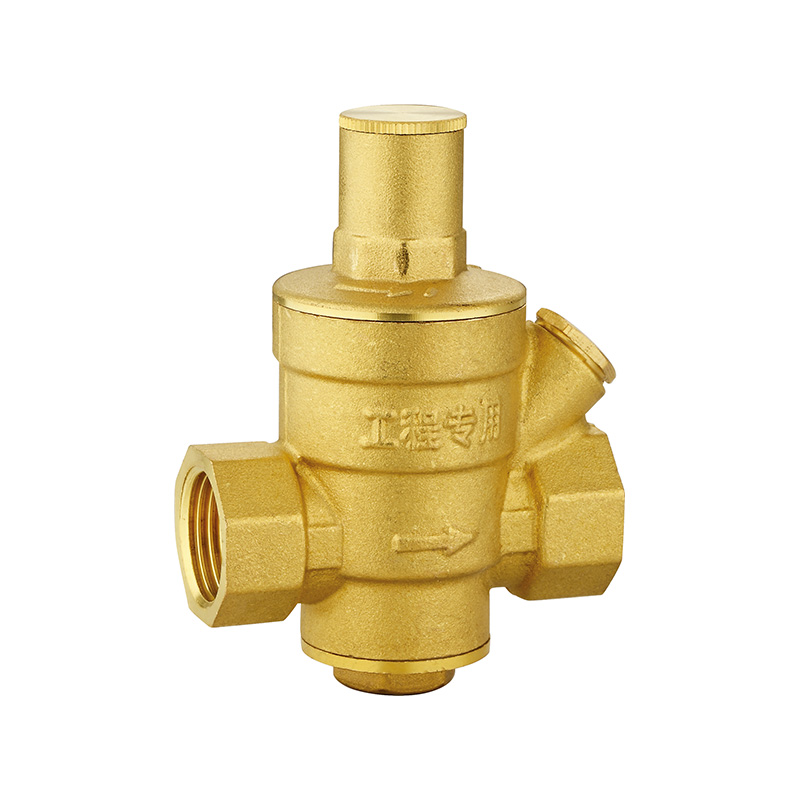
What does a brass pressure-reducing valve actually do?
A pressure-reducing valve takes high incoming water pressure and lowers it to a steady, lower outlet pressure, regardless of how much the inlet pressure fluctuates. City water mains often run at 400 to 600 kPa (about 60 to 90 psi). That is fine for fire hydrants, but too high for indoor plumbing. High pressure wears out washing machine hoses, makes taps drip, and can damage water heaters. A PRV drops the pressure to a safe range of 200 to 400 kPa (30 to 60 psi).
The valve works by balancing the force from a spring against the force from the outlet water pressure. When outlet pressure drops below the spring setting, the valve opens to let more water through. When outlet pressure rises above the setting, the valve closes slightly to reduce flow. It happens automatically, hundreds of times a day if needed.
Why brass?
Most pressure reducing valves for residential and light commercial use are made of brass. Not because brass is the strongest metal or the cheapest, but because brass does not rust. A steel valve would corrode from the inside within a few years, and rust particles would travel through the pipes. Brass also machines well, so manufacturers can create the precise internal passages and seat surfaces needed for reliable operation.
The brass used is usually dezincification-resistant (DZR) brass. Ordinary brass contains about 30% zinc. In water with high chlorine or low pH, the zinc can leach out, leaving porous copper. DZR brass has small amounts of arsenic or antimony that prevent this. A DZR brass PRV typically lasts 10 to 20 years. A non-DZR brass valve in aggressive water might fail in 3 to 5 years.
What is inside the valve?
You do not need to be a plumber to understand the basic parts.
The body. The main housing is usually cast or forged brass. It has an inlet, an outlet, and a cavity inside for the moving parts.
The spring. A stainless steel coil spring sits in the bonnet (the top part of the valve). The spring pushes down on a rubber diaphragm. The spring is what you adjust when you change the outlet pressure.
The diaphragm and plunger. A flexible rubber disc (the diaphragm) seals the spring chamber from the water. The diaphragm connects to a metal plunger (also called the stem or push rod). When outlet pressure drops, the diaphragm moves the plunger, which opens a small pilot hole or lifts a seat.
The seat and seal. This is the actual shut-off point. A rubber or PTFE disc seals against a brass or stainless steel seat. When the valve is closed, the seal blocks water flow. When open, water passes through.
The adjustment screw. On top of the bonnet, a screw with a lock nut. Turn it clockwise to increase outlet pressure. Turn it counterclockwise to decrease outlet pressure. Usually, one full turn changes the pressure by about 30 to 50 kPa (5 to 7 psi).
Conact Us Anytime.
-
Email us
kyoda@kyodavalve.com
-
Call us
+86-19105861791