English
 русский
 Español
 عربى
عربى
What Materials Are Used in a 2-Inch Brass Gate Valve?
A 2-inch brass gate valve is an assembly of multiple components, each made from materials selected for specific functions such as strength, sealing, wear resistance, and corrosion protection.
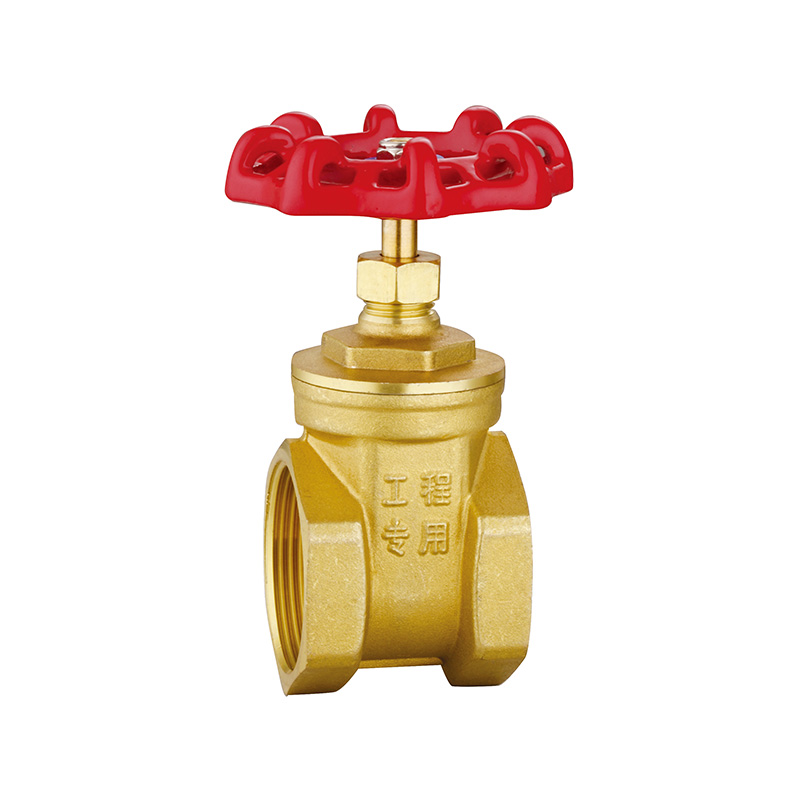
Valve Body and Bonnet: The main body and the top cover (bonnet) are typically made from brass. The specific brass alloy can vary. Forged brass is often used for smaller valves and provides a dense, strong structure. For a 2-inch valve, which is larger, the body and bonnet are often cast using a brass alloy suitable for sand casting or investment casting. These alloys are chosen for their ability to flow well into molds and their good machinability. Modern valves exclusively use lead-free brass alloys to comply with potable water regulations, ensuring that the water passing through does not accumulate harmful levels of lead.
Gate (Wedge): The gate is the component that moves up and down to control flow. In brass gate valves, the gate is often made of brass as well. It may be machined from a solid brass casting. The gate is typically wedge-shaped to create a tight seal against the seats. Some designs feature a gate that is completely made of brass, while others may have a gate that is a brass-plated or coated material. In some industrial applications, the gate might be made from stainless steel for enhanced durability and corrosion resistance, even within a brass-bodied valve.
Stem: The stem connects the handle to the gate, translating rotational motion into linear motion to raise or lower the gate. The stem is typically made from brass or another corrosion-resistant material like stainless steel. For larger valves like the 2-inch size, the stem must have sufficient strength to operate the gate under pressure. The threaded portion of the stem, which engages with the bonnet's threads, requires precise machining and a material with good wear resistance. Stainless steel stems offer higher strength and are common in higher-pressure or more demanding applications.
Seat Rings: The stationary surfaces inside the valve body against which the gate seals are called seats. In many brass gate valves, the seats are integral to the body, meaning the brass itself is machined to form the sealing surface. However, in some designs, separate seat rings made of materials like bronze or stainless steel may be inserted. These materials can offer better wear resistance or be more easily replaced if damaged.
How Does a 2-Inch Brass Gate Valve Work, and What Is Its Flow Characteristic?
Understanding the operating principle helps in selecting the right valve for a given application and using it correctly.
Operating Principle: A gate valve operates by lifting a rectangular or wedge-shaped gate out of the path of the fluid. The handle (handwheel) is attached to a threaded stem. Turning the handle rotates the stem, and because the stem threads are engaged with threads in the bonnet, the stem moves linearly, raising or lowering the gate. It typically requires multiple turns of the handle to move the gate from the fully closed to the fully open position. This multi-turn operation is a defining characteristic of gate valves.
Flow Characteristic: Gate valves are designed to be used either fully open or fully closed. When fully open, the gate is completely retracted into the bonnet, leaving an unobstructed passage for fluid flow. This results in very low pressure drop across the valve, which is a primary advantage of gate valves. They are not intended for throttling (regulating flow). When partially open, the gate is exposed to the flowing fluid, which can cause vibration, damage to the gate and seats, and noisy operation. Prolonged operation in a partially open position can bring about premature wear and failure.
Rising vs. Non-Rising Stem: There are two common stem designs. In a rising stem valve, the stem moves up as the valve is opened, providing a visual indication of the valve position. This design is common where space above the valve allows. In a non-rising stem valve, the stem threads are engaged with the gate, so the gate travels up and down the stem while the stem itself does not rise. The handle remains at the same height. This design is used where vertical space is limited, such as in buried installations, but it does not provide a visual position indicator.
What Are the Typical Applications for a 2-Inch Brass Gate Valve?
The 2-inch size and brass construction make these valves suitable for a range of applications where corrosion resistance and reliable shut-off are required.
Main Water Shut-Off Valves: In residential and commercial buildings, a 2-inch brass gate valve is commonly used as the main shut-off valve for the entire building's water supply. Its full-port design ensures minimal pressure loss, and its durability provides a reliable means to isolate the building's plumbing for repairs or emergencies. Brass is preferred for this application due to its resistance to corrosion from potable water.
Irrigation Systems: Large-scale irrigation systems, such as those for agricultural fields, golf courses, or large landscaping projects, often use 2-inch gate valves to control water flow to different zones or sections. The valves are installed in underground vaults or at key distribution points. Brass offers good durability in outdoor environments, though for buried applications, the non-rising stem design is often used to minimize the required depth of the valve box.
Industrial and Commercial Plumbing: In light industrial settings, commercial kitchens, laundries, and other facilities, 2-inch brass gate valves are used to isolate equipment such as boilers, water heaters, large dishwashers, and cooling towers. Their ability to provide a tight shut-off allows for safe maintenance of these systems. The brass construction is compatible with a wide range of fluids, including hot and cold water, and some non-corrosive process fluids.
le-tight shut-off (when equipped with resilient seats) are valued in these applications.
How Do You Properly Maintain and Troubleshoot a 2-Inch Brass Gate Valve?
Like any mechanical device, gate valves require some maintenance and may occasionally experience problems.
Regular Operation: The important maintenance practice is to operate the valve through its full range (fully open to fully closed and back) periodically, such as once or twice a year. This helps prevent the valve from seizing due to mineral deposit buildup or corrosion. It also ensures that the valve will function when needed in an emergency.
Stem Leak Repair: If a leak develops around the stem when the valve is open or closed, it often indicates that the packing gland nut needs tightening. The nut should be tightened slowly and carefully, checking to see if the leak stops. Overtightening can make the valve difficult to operate or damage the packing. If tightening does not stop the leak, the packing material may need to be replaced, which requires partially disassembling the valve.
Valve Won't Fully Close: If the valve does not shut off flow completely, several issues could be the cause. Debris may be lodged on the seat, preventing the gate from sealing. This can sometimes be cleared by partially opening the valve and then quickly closing it to flush the debris away. If the problem persists, the gate or seats may be worn or damaged. In some cases, the gate may have become detached from the stem. Repairing these issues typically requires removing the valve from the line for disassembly and inspection.
Conact Us Anytime.
-
Email us
kyoda@kyodavalve.com
-
Call us
+86-19105861791